

Okay, so let’s just say it out loud; most people aren’t broke because they don’t earn enough. They’re broke because of habits nobody ever sat them down and explained properly.
Funny how that works, right?
You’d think wealth building is some complicated formula reserved for finance nerds with spreadsheets glowing at 2am, but honestly, a huge chunk of it comes down to avoiding a handful of dumb, repeatable mistakes.
I’ve made half of them myself, so no judgment here, just observations from the trenches. And here’s a small thing that trips people up early, they never actually sit down and do a proper financial health review, before making big decisions.
Not once a year, not even once in five years. They just… wing it.
Here’s the weird part though, none of these mistakes feel dramatic while they’re happening.
Nobody wakes up and decides “today I shall sabotage my future.” It’s quieter than that. It’s a hundred tiny choices that feel harmless in isolation.
A skipped budget check here, a “just this once” purchase there, until one day you look up and wonder where a decade went.
That’s kind of the whole point here, not to scare anyone, just to name the patterns so you can actually spot them in your own life before they turn into permanent habits.
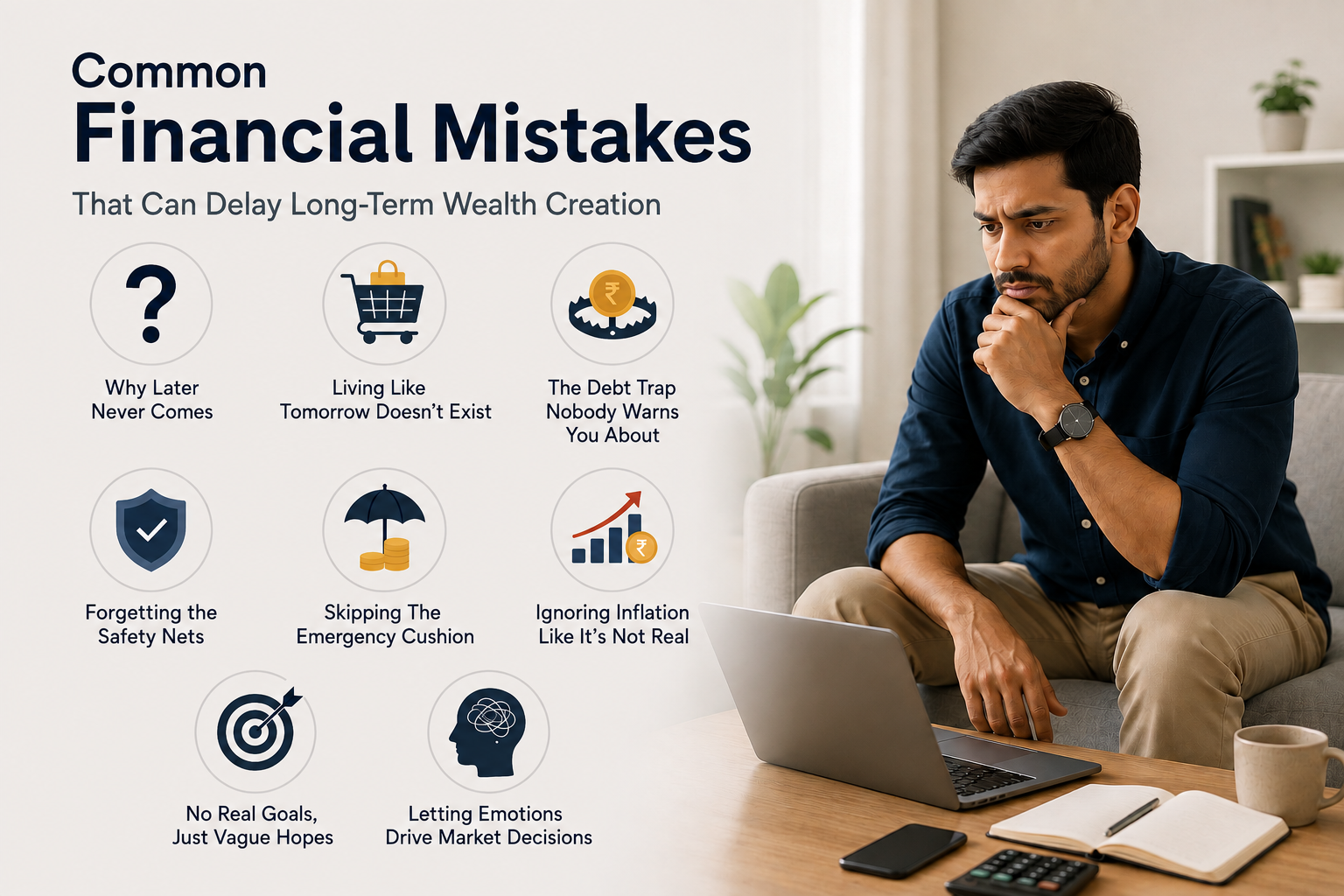
Why “Later” Never Comes
Now here’s the thing about procrastination and money: it’s sneaky. You tell yourself you’ll start saving once the promotion comes through, once the kids are in school, once the market “settles down” (spoiler; it never fully does).
Meanwhile, compounding, that quiet little math trick that builds wealth in the background, just keeps ticking without you.
Delay ten years and you’re not losing ten years of growth. You’re losing decades of momentum because the early years are when compounding does its heaviest lifting. Hold on, let me think about how to say this simply.
Imagine planting a tree today versus planting it a decade from now on. Same tree, wildly different shade by the time you actually need it.
And look, I get why people wait.
Life is genuinely expensive and unpredictable, and telling someone “just start investing” when they’re stretched thin feels a bit tone deaf. But there’s a difference between real constraints and comfortable excuses.
Even a tiny, almost embarrassingly small amount set aside consistently beats a big, dramatic plan that never actually launches.
Consistency quietly beats intensity.
Every single time.
Even though intensity gets all the glory in those motivational posts.
Living Like Tomorrow Doesn’t Exist
Lifestyle creep is one of those phrases that sounds boring until it happens to you and suddenly your grocery bill has a name brand obsession and your car payment could fund a small vacation.
Every raise, every bonus, quietly absorbed into slightly nicer everything.
Nothing dramatic, just death by a thousand upgrades. A proper financial health review usually exposes this instantly, because when you track where money goes instead of guessing, the pattern is almost embarrassing.
People aren’t villains here; they’re just human, wired to want more when more becomes available.
The Debt Trap Nobody Warns You About
Debt itself isn’t evil, despite what some finance influencers scream into their cameras. A mortgage, a reasonable business loan, even a car loan when structured smart.
These can be tools. The mistake is treating high interest consumer debt like its normal background noise.
Credit card balances rolling month to month, buy now pay later stacking up like a house of cards, “minimum payment” becoming a permanent lifestyle rather than an emergency fallback.
That interest compounds too, except against you this time.
Ironically, isn’t it?
Forgetting The Boring Safety Nets
Nobody dreams about insurance.
It’s not exactly a thrilling dinner conversation, and honestly most people actively avoid thinking about it because it forces you to picture bad things happening.
But here’s the uncomfortable truth. One uninsured medical emergency or one badly timed accident can wipe out years, sometimes decades, of careful saving in a single stroke.
It’s almost unfair how quickly it happens. People will happily spend on things that make life feel exciting while quietly skipping the unglamorous stuff that protects everything they’ve built.
Health cover, income protection, even basic life cover if there are dependents involved.
These aren’t exciting purchases, but they’re the quiet guardians standing behind every other financial goal you’re chasing.
Skipping The Emergency Cushion
Here’s a rhetorical question for you-
What happens when the car breaks down, the fridge dies, and a medical bill shows up all in the same miserable month?
If there’s no cushion, the answer is usually more debt, more stress, and a wealth building plan that gets shoved to the back burner yet again.
An emergency fund isn’t glamorous. It won’t make anyone jealous at a dinner party. But it’s the thing standing between a rough month and a genuine financial spiral.
Chasing The Next Hot Thing
Every few years there’s a shiny new investment everyone’s suddenly an expert on.
Crypto, meme stocks, some obscure real estate scheme a coworker swears by. And look, some people do win big.
But for every winner there’s a quieter, less talked about pile of people who jumped in late, panicked, and sold at the bottom.
Investing without a strategy isn’t investing. It’s gambling wearing a nicer outfit.
Boring, diversified, patient investing rarely trends on social media, yet it’s usually what actually builds lasting wealth.
Ignoring Inflation Like It’s Not Real
This one’s sneaky because it doesn’t feel urgent.
Money sitting in a low interest savings account feels safe, doesn’t it?
Except inflation is quietly nibbling away at its actual purchasing power every single year. Cash today buys less tomorrow, always has, probably always will.
People who avoid this mistake understand that “safe” and “growing” aren’t the same thing, and they let at least part of their money work harder than a basic savings account ever could.
No Real Goals, Just Vague Hopes
“I want to be rich someday” isn’t a plan, it’s a wish.
Real wealth building usually starts with something oddly specific: a number, a date, a purpose.
Retire by a certain age, save for a home deposit by next year, build a business fund within eighteen months.
Vague hopes don’t get tracked, and things that don’t get tracked rarely improve. This is exactly where structure earns its keep instead of motivation alone.
Letting Emotions Drive the Bus Markets dip, panic sets in.
People sell at the worst possible moments.
Markets climb, greed kicks in.
People pile in right before a correction. Emotional investing is basically the opposite of what actually works long term.
Real wealth tends to reward the boring, patient, slightly detached approach, the one where you barely check your portfolio and just let time do its quiet, unglamorous work.
Final Words, Bringing It All Home
So where does that leave us?
Honestly, wealth creation isn’t about some secret code, only a few lucky people crack.
It’s mostly about dodging the obvious traps: procrastination, lifestyle inflation, bad debt habits, skipping insurance, skipping the emergency fund, chasing hype, ignoring inflation, wandering without goals, letting emotions steer decisions, and never stepping back to look at the whole picture.
None of them are flashy.
All of it works.
Maybe the real starting point is just this, block out twenty minutes this week for your own financial health review, be brutally honest with yourself, and build from there.
Will it feel a bit tedious at first?
Probably.
Will it be worth five, ten, twenty years down the line?
Almost certainly.
Slow, steady, unremarkable progress.
That’s usually what long term wealth actually looks like once you strip away all the noise, the hype, and the shiny distractions competing for your attention every single day.