

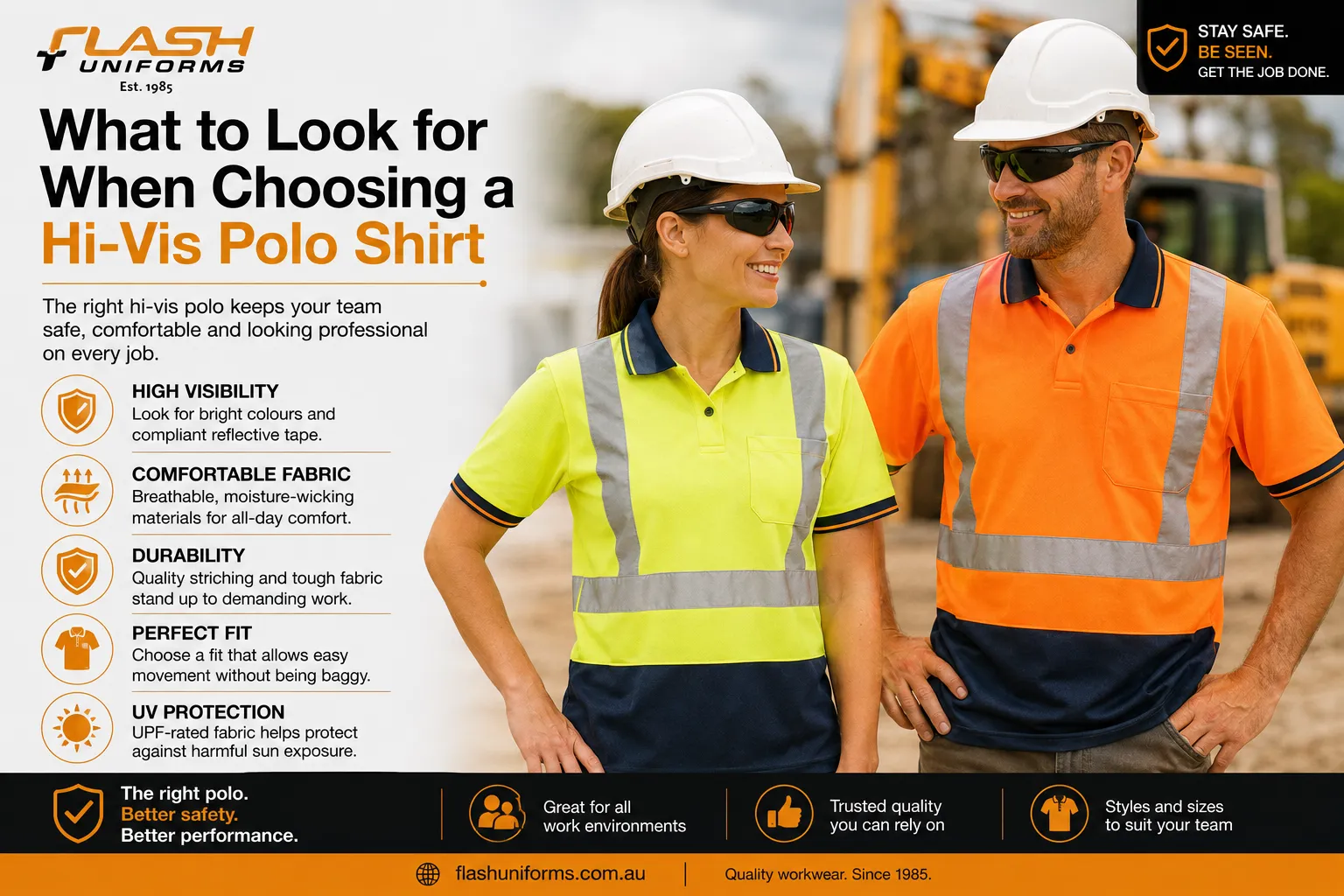
A hi-vis polo can look like a simple piece of work clothing, but the details decide whether it actually works. A shirt that feels fine for ten minutes can turn uncomfortable after hours of lifting, bending, driving or working outdoors — and unlike an ordinary work shirt, a hi-vis polo also has a safety job to do. Getting both right, comfort and visibility, is what separates a good one from a garment staff quietly avoid.
Visibility is the starting point, but it can’t be the only consideration. Fit, fabric, sleeve length, breathability, durability and how the polo works with the rest of the uniform all matter too. For businesses assembling practical hi vis attire, choosing around real working conditions produces a far better result than picking on colour or price alone.
Confirm the Visibility Requirements First
Hi-vis is safety clothing before it’s a uniform, so the first step is different from choosing an ordinary polo: confirm what your workplace or site actually requires. Requirements vary between sites, roles and conditions — some need day-only hi-vis, others require day/night garments with reflective elements, and some specify particular colours or coverage.
This matters most for staff who move between sites. A contractor may need to meet the requirements of every location they visit, not just their own company’s policy. The only reliable approach is to confirm what’s required with the employer, supervisor or site manager before choosing — and never assume a garment complies just because it’s brightly coloured or looks like something already in use. Getting this right first means the comfort and fit decisions that follow are made within the rules, not against them.
Match the Polo to the Job
Once you know the visibility requirement, think about what the working day actually involves, because a warehouse worker, landscaper, delivery driver and tradesperson all place different demands on a shirt — and staff within one company often work in different environments.
Consider whether the polo is worn mainly indoors or out, whether the role is physically demanding, whether the worker faces changing temperatures, whether other layers go over or under it, and how often it’ll be washed. Those answers narrow the options quickly. A good work shirt suits the job rather than forcing the worker to adapt to the clothing.
Test the Fit in Motion
Fit strongly affects comfort over a full shift. Too tight and movement through the shoulders, chest and arms feels restricted; too loose and excess fabric gets in the way around equipment or during physical tasks.
The key is to test the movements the job involves rather than judging in front of a mirror — reaching overhead, bending forward, turning side to side, squatting, raising the arms, sitting in a vehicle, reaching across the body. Those quickly reveal whether a polo gives enough room for everyday work. For a whole-team order, an appropriate size range matters too, since one standard fit won’t sit comfortably on everyone.
Prioritise Fabric and Breathability
Fabric is usually the first thing staff notice after a few hours. Active work generates real body heat, especially outdoors or in warm weather, and a heavy shirt that doesn’t suit the environment becomes uncomfortable fast.
When comparing hi vis polo shirts, look past appearance to how the fabric will feel during the shift — weight, breathability, moisture management, feel against the skin, stretch, drying, durability and care requirements. There’s no universal best: someone outdoors all day may prioritise lightweight comfort, while a worker in a cooler setting may prefer a slightly heavier garment that layers well.
Choose Sleeve Length for the Conditions
Sleeve length should follow the job and environment, not just personal preference. Short sleeves give more airflow around the arms and suit active work in warm conditions; long sleeves add arm coverage and suit other settings. For teams working across different areas or seasons, offering both often makes sense — the same worker may want short sleeves in summer and something warmer when temperatures drop. Uniform policies work better when staff have suitable options for the conditions they actually face.
Make Sure It Works With Other Layers
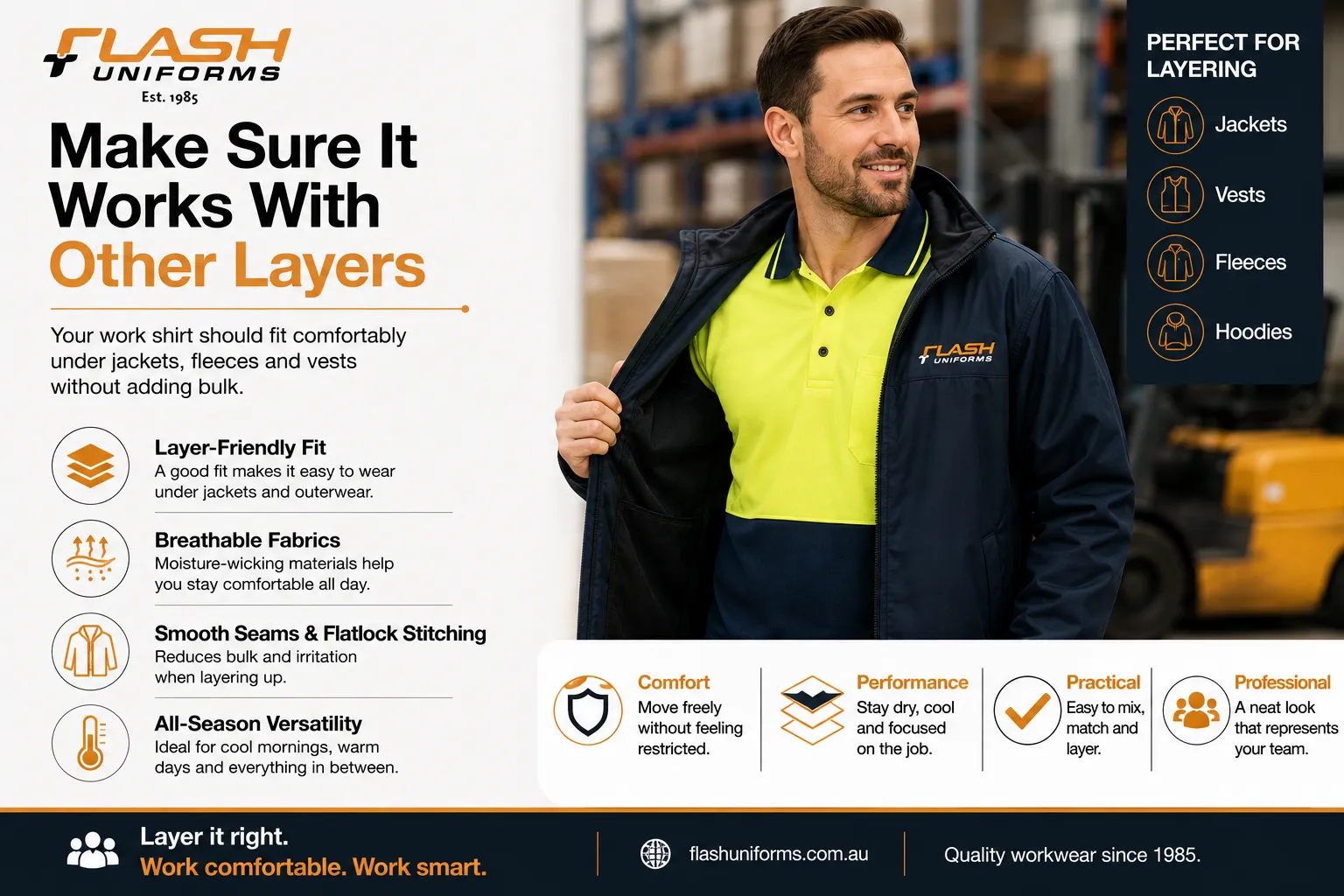
A hi-vis polo is usually one part of a wider outfit that may include jackets, hoodies, vests, wet-weather gear and protective equipment. A polo that fits perfectly on its own can feel tight over a base layer, and bulky seams or an oversized collar can be uncomfortable under another garment.
Staff who move between indoor and outdoor areas benefit most from a uniform that makes adding and removing layers easy. Rather than choosing each garment separately, it helps to treat the uniform as one complete system — and to check that any hi-vis or reflective requirements are still met once layers go on over the top.
Don’t Overlook the Collar
The collar is a small detail with a real effect on both look and comfort. A polo collar gives a slightly more structured, tidy appearance than a plain tee, which helps when staff deal with customers, contractors or visitors — but it also has to stay comfortable all shift. Check that it doesn’t feel restrictive around the neck, sits properly under outerwear, holds its shape, doesn’t interfere with equipment, and stays comfortable in motion. A well-designed polo balances a neat presentation with everyday practicality.
Plan for Durability, Washing and Rotation
Work clothing takes more punishment than casual wear — dust, sweat, dirt and frequent washing — so check the care instructions against how uniforms will really be maintained. Think about how often shirts are washed, whether staff launder their own or a service is used, how many each worker receives, and how easily replacements can be ordered.
That last point matters: even an excellent polo is impractical if a worker has only one. Staff working five days a week need enough shirts to rotate comfortably between shifts and laundry, with the right number depending on shift patterns, how quickly garments get dirty, and seasonal changes. And the cheapest shirt upfront isn’t the best value if it needs replacing often — it’s more useful to weigh the garment’s whole working life.
Consider Appearance and Branding Within the Rules
Hi-vis still has to function, but appearance matters where staff meet customers or arrive at client sites, and a coordinated uniform presents the business consistently. Think about how the polo coordinates with pants, shorts, jackets, vests, headwear and company branding — and remember a garment should still look presentable after a real working day, not just in catalogue photography.
Branding can tie practical clothing to the wider business identity, which is useful for staff who visit customer properties, work at client sites, make deliveries or represent the business publicly. Keep decoration proportionate — consider logo size, position and contrast, and use a consistent branding position across approved garments for a coordinated look. Just make sure any decoration doesn’t compromise the garment’s visibility where that’s a requirement.
Involve the People Who’ll Wear Them
Staff are often the best source of information on whether a uniform works. Rather than choosing purely from a purchasing perspective, ask them: is the shirt comfortable after several hours, does it allow enough movement, does it run too warm, is the length right, does the collar stay comfortable, does it work under jackets, and does the sizing suit them?
For a large order, providing samples to a small group to wear during normal work can surface issues a size chart never would. The people wearing hi-vis every day notice practical details an office-based decision would miss.
Final Thoughts
Choosing a hi-vis polo is more than picking a size and colour. It starts with confirming the visibility requirements for the role, then finding a garment that suits the environment, allows natural movement and stays comfortable across a full shift — weighing fabric, breathability, fit, sleeve length, layering, durability and washing along the way.
It also means seeing the polo as part of the wider uniform, where pants, outerwear, branding and site requirements work together rather than being chosen in isolation. Above all, involve the people who’ll wear it. A well-chosen hi-vis polo does its safety job and its comfort job at once — keeping staff visible while letting them get on with the work without thinking about what they’re wearing.