

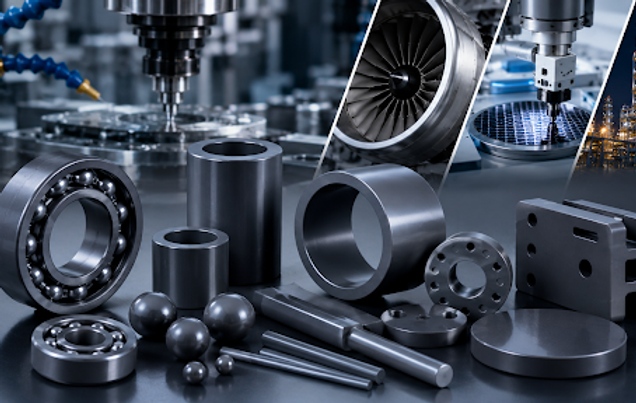
The selection of material can influence the performance of an industrial product, its durability and maintenance requirements. When it comes to heat, pressure, corrosion, wear and mechanical stress, there are a number of options for engineers and purchasing that are not the same. With an understanding of the application, material selection can help to minimize costly changes later in the process. It also facilitates the identification of the supplier that can supply the desired grade, form, quantity and specifications.
Start With the Working Environment
The first step is to know where the material is going to be applied. Material performance can be affected by many factors such as temperature, pressure, moisture, chemicals, friction, electrical conditions and mechanical loads. The material that works well in a controlled environment may not be adequate for continuous exposure to extreme environments.
For instance, metals that can withstand heat or advanced ceramics may be needed for high-temperature equipment. Chemical resistance may be highly important for components that come into contact with corrosive chemicals. Repeated movement applications may need materials that have the appropriate wear and fatigue characteristics. First, the definition of these conditions will drastically reduce the number of materials that can be used.
Consider Strength and Durability Requirements
Another crucial factor is mechanical performance. Depending on the function of the component, it might require high tensile strength, hardness, impact resistance, stiffness or fatigue resistance. The anticipated service life is also a factor to take into account when choosing a final product.
Advanced engineering materials can be used to achieve special performance that cannot be achieved by conventional materials. But performance is not the only criterion for a material to be used in the application. The material should be used to meet the actual mechanical specifications, rather than because of its impressive specifications.
Check Temperature and Chemical Exposure
The behavior of materials can be greatly influenced by temperature. Certain metals are strong at high temperatures; others may become weak, brittle or lose essential properties. Ceramics can be very temperature resistant, but may not be used in certain mechanical environments due to their brittle nature.
Chemical exposures should also be monitored. Some materials can be degraded by acids, alkalis, solvents, salts and other materials over time. Chemical compatibility is a factor to consider when choosing materials for processing equipment or industrial applications, in addition to temperature and mechanical considerations.
Think About Manufacturing Requirements
The material selection should also take into account the method of manufacture of the finished component. Which materials are practical may be altered by cutting, machining, forming, coating, welding, sintering, casting or other manufacturing processes.
A material can be very strong and have a high resistance to stress but be hard or expensive to shape to the desired form. If the buyer is ordering custom components, he or she should consult with the supplier before ordering about dimensions, tolerances, surface requirements, quantity, and manufacturing processes.
This is especially important when businesses need to buy engineering materials supplier solutions for specialized projects. Clear technical information helps suppliers understand the actual requirement rather than simply supplying a general-purpose material.
Evaluate Specifications and Documentation
Industrial buyers should pay attention to material specifications and documentation. Depending on the application, useful information may include chemical composition, purity, mechanical properties, temperature limits, dimensions, tolerances, and applicable standards.
Documentation becomes particularly important for aerospace, semiconductor, research, medical, and other applications where material consistency can be critical. Buyers should make sure the supplier can provide the information required for internal quality checks and production records.
Balance Performance with Cost
Not all the most expensive materials are necessarily the best. It is preferable to look at total value for the expected service life. A material that costs more to buy can help to decrease the number of times it needs to be replaced, the time it takes to replace it, maintenance, or processing issues.
At the same time, over-specifying a material can unnecessarily increase project costs. The goal is to select the material that provides the required performance without paying for properties that the application does not need.
Conclusion
The choice of engineering material is primarily a selection process of fitting the properties of the material to the actual operating conditions. The factors to consider before deciding include: temperature, chemical exposure, mechanical stress, manufacturing method, documentation, availability and overall cost. A trusted supplier is also able to explain the specifications and look for the best possible solution to the specific requirements. If you’re considering materials for a challenging project, you should check out regmetals.com for specialty materials and other industrial needs. It can be helpful to have a clear picture of the project requirements and to discuss all the options with them.